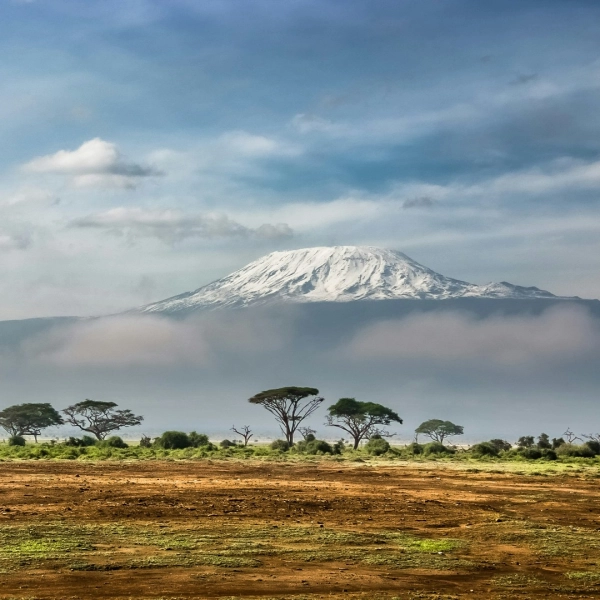
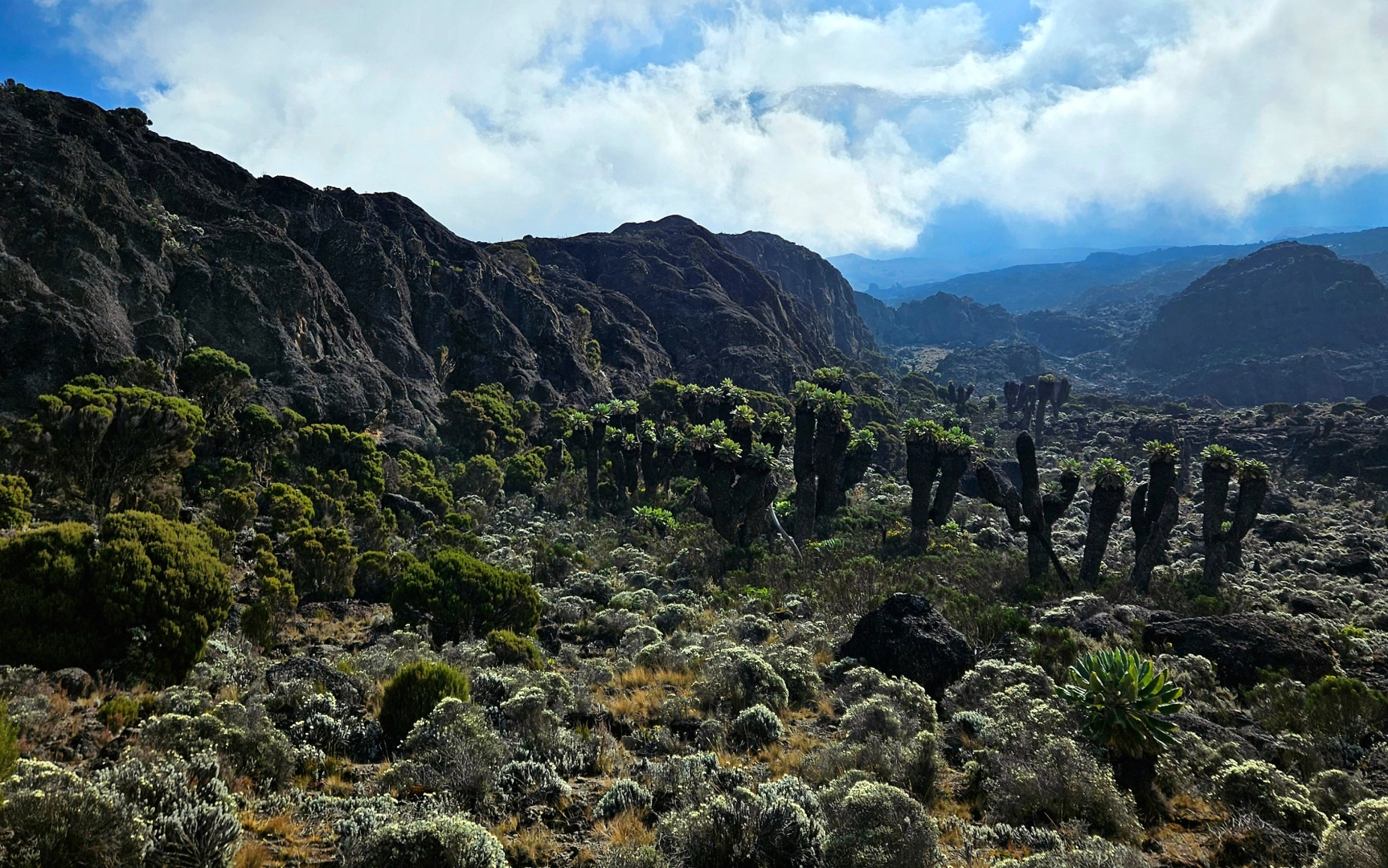
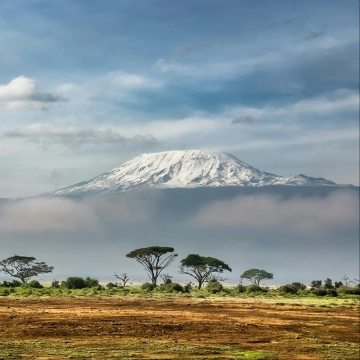
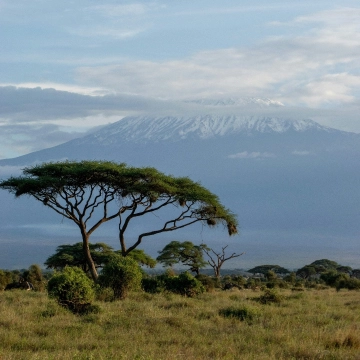
Mount Kilimanjaro, at 5,895 meters above sea level, is the highest mountain in Africa and is one of the Seven Summits, the highest peaks on each continent. Located in Tanzania near the border with Kenya, it is an extinct volcano with three peaks: Kibo, Mawenzi, and Shira. Kibo is the highest point and is home to the famous Uhuru Peak. Despite its height, Kilimanjaro is one of the most accessible peaks in the world as no technical climbing skills are required. However, the challenge is significant due to the risk of altitude sickness. The mountain offers an impressive variety of landscapes, from rainforests and moorlands to alpine deserts and icy peaks.
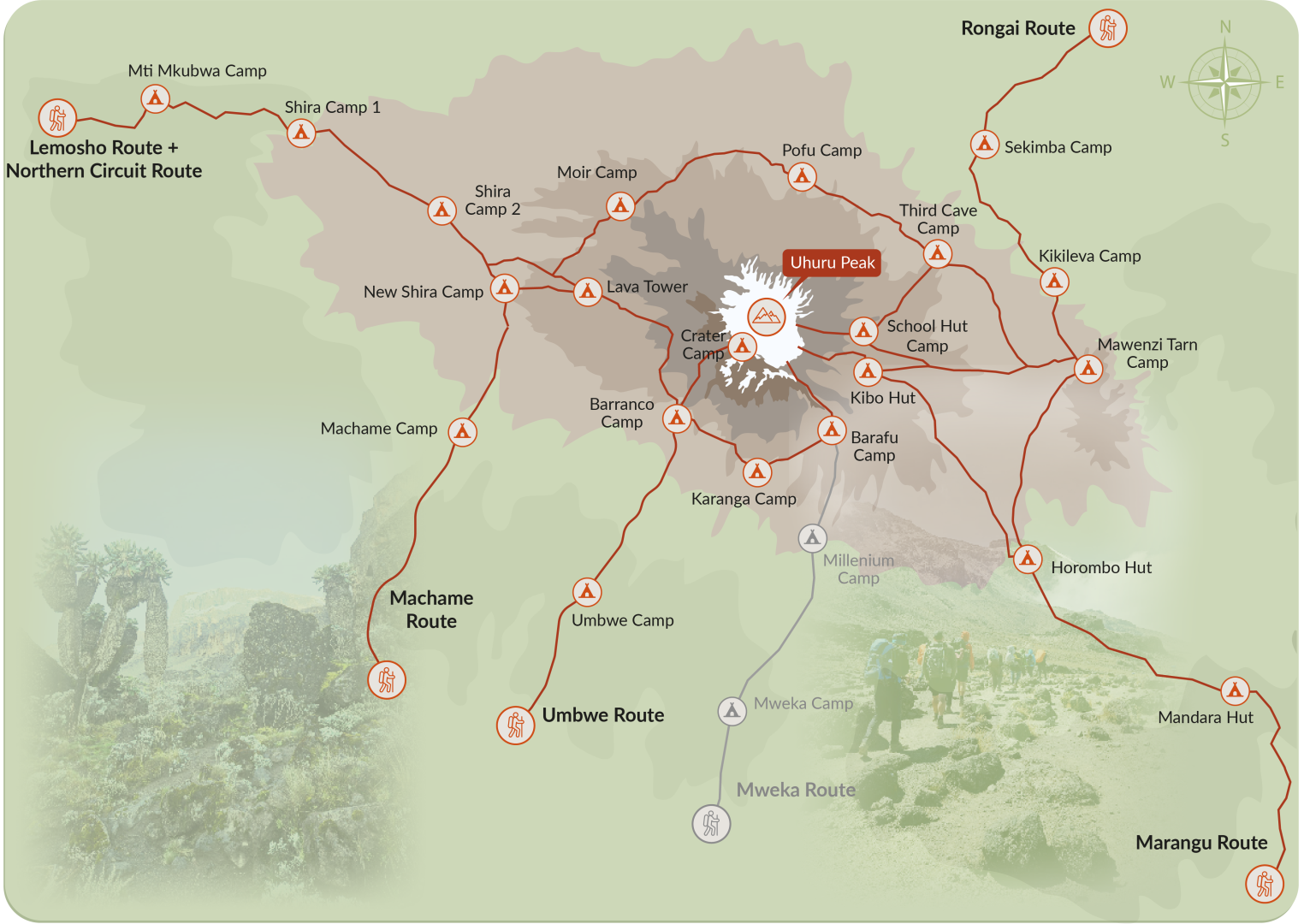
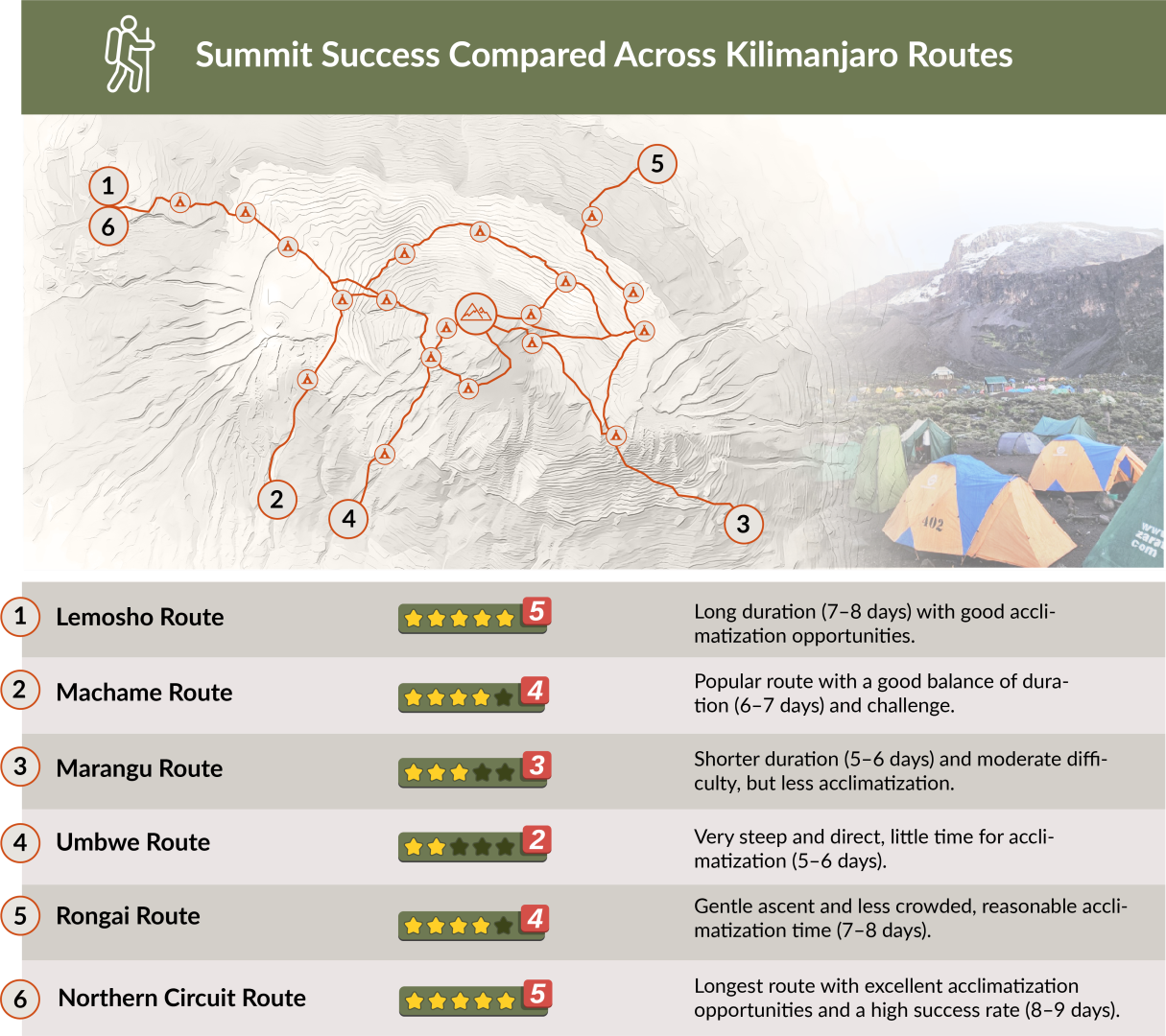
The Umbwe Route is the steepest and most challenging route on Mount Kilimanjaro. Lasting 6 to 7 days, it follows a direct ascent path and gains altitude rapidly. The route passes through dense rainforest, dramatic mountain scenery, and the spectacular Barranco area before joining the southern summit routes.
Due to its rapid elevation gain, the Umbwe Route offers less time for acclimatization than most other Kilimanjaro routes and is therefore best suited to experienced trekkers with a high level of fitness. For climbers seeking a demanding, less-crowded, and adventurous ascent, the Umbwe Route offers one of the most rewarding experiences on Kilimanjaro.
Accommodation: Chanya Lodge, Moshi
Upon arrival at Kilimanjaro International Airport, you will be warmly welcomed by a Sunrise Expedition driver and transferred to Chanya Lodge in Moshi. Here, you can relax after your journey and prepare for the adventure ahead.
In the evening, you will meet a member of our experienced mountain team for a personal pre-climb briefing. During this session, you will receive important information about the trek, safety procedures, and equipment requirements. We will also review your gear together and assist with any equipment that may still be needed. Overnight accommodation is at Chanya Lodge.
Altitude: 1,800 m to 2,850 m
Hiking Time: approx. 5–7 hours
Distance: approx. 11 km
Vegetation Zone: Rainforest
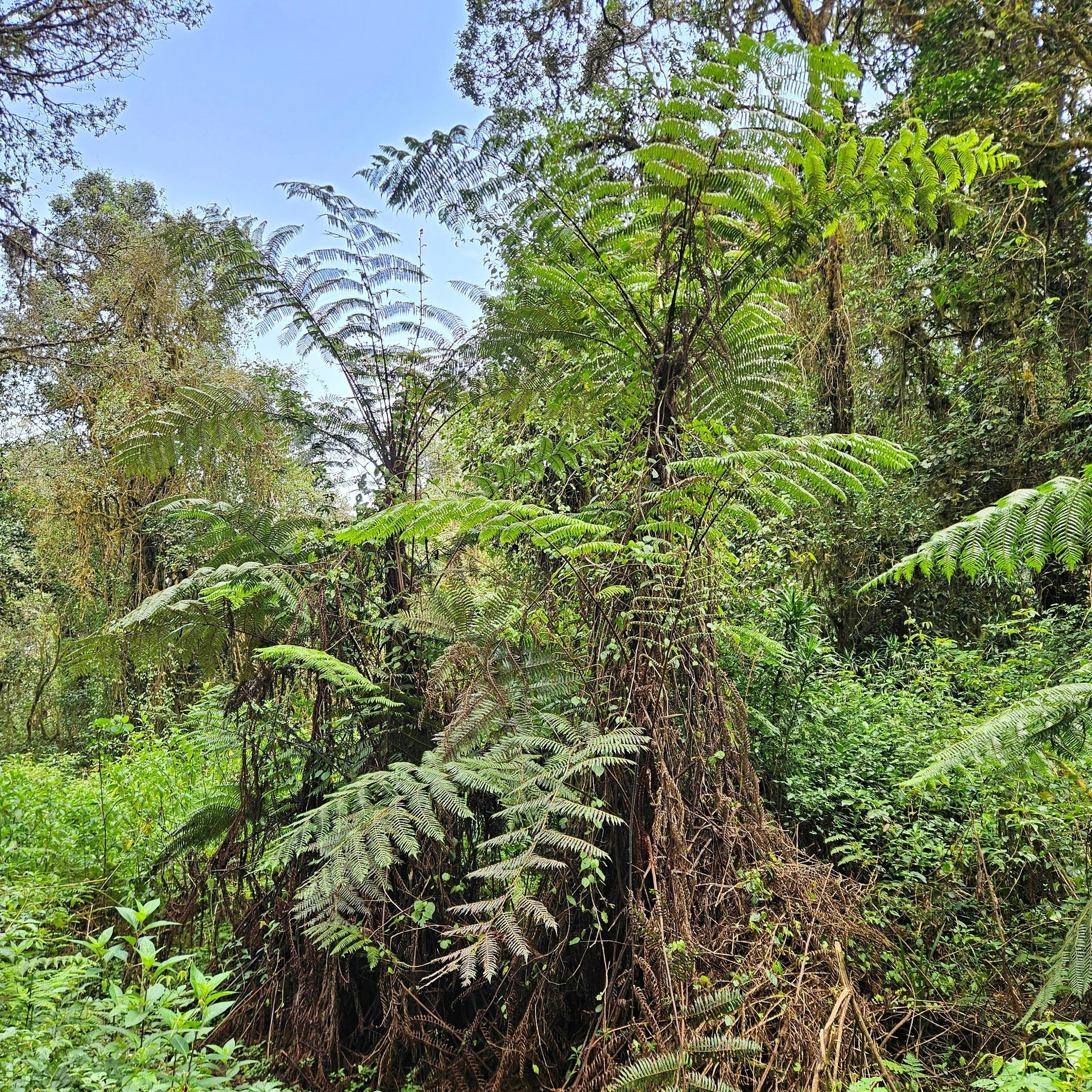
After registration at Umbwe Gate, the climb begins on one of Kilimanjaro’s steepest and most direct routes. The trail winds through dense mountain rainforest filled with towering trees, ferns, and moss-covered vegetation. As one of the least-traveled routes on the mountain, Umbwe offers a true sense of adventure and wilderness from the very first day. Overnight at Umbwe Cave Camp.
Altitude: 2,850 m to 3,950 m
Hiking Time: approx. 5–6 hours
Distance: approx. 6 km
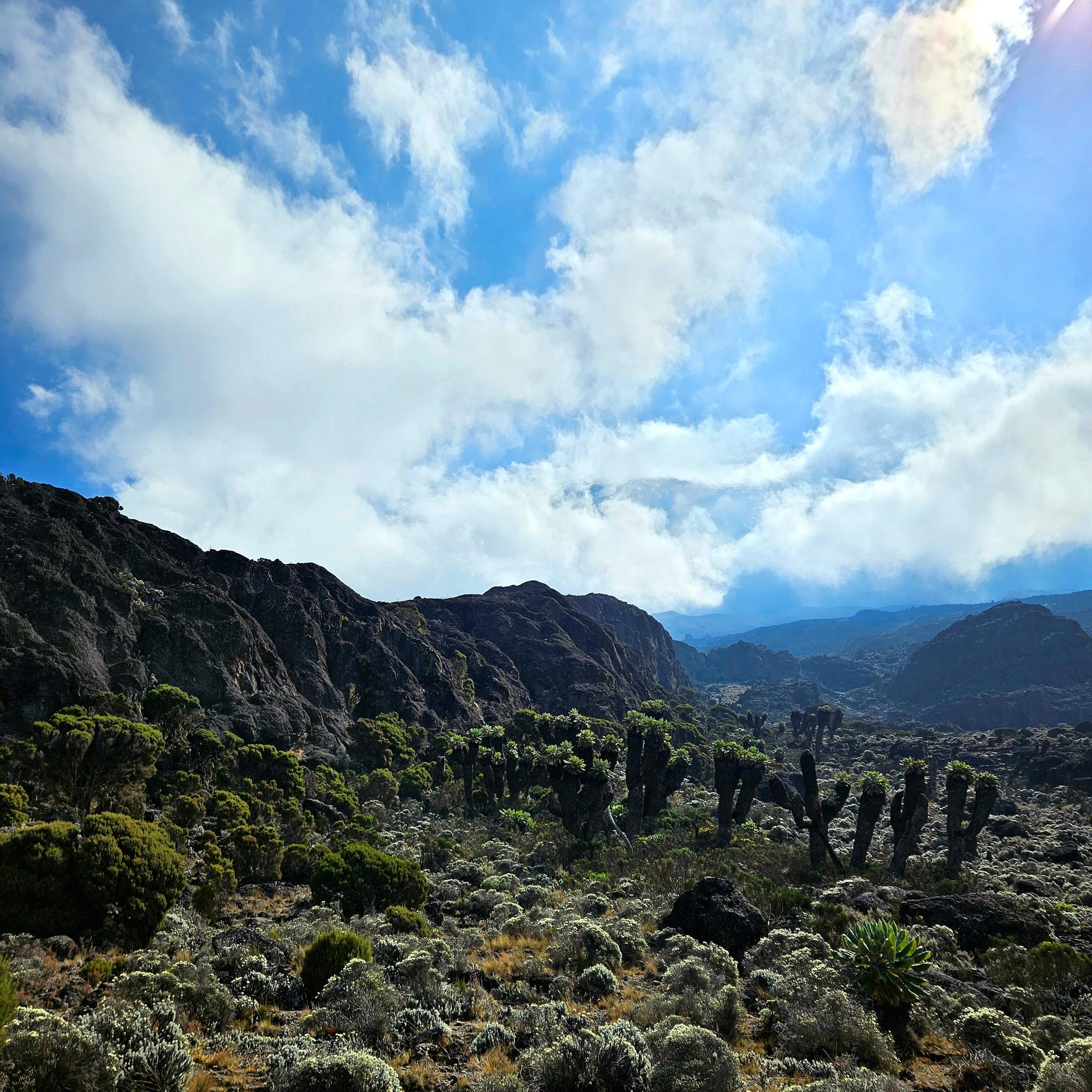
Vegetation Zone: Heath and Moorland
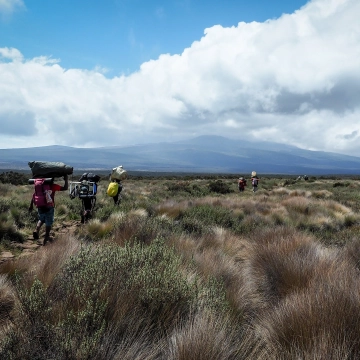
The trail climbs steeply out of the rainforest and enters Kilimanjaro’s heath and moorland zone. As the altitude increases, spectacular views of the mountain’s southern slopes begin to unfold. The landscape becomes increasingly open and dramatic before reaching the beautifully situated Barranco Camp. From here, climbers enjoy impressive views of the towering Barranco Wall.
Altitude: 3,950 m to 4,035 m
Hiking Time: approx. 4–5 hours
Distance: approx. 5 km
Vegetation Zone: Alpine Desert
After breakfast, the route ascends the famous Barranco Wall, one of the most exciting and scenic sections of any Kilimanjaro climb. After reaching the upper plateau, the trail traverses spectacular high-altitude terrain with panoramic views of glaciers, valleys, and surrounding peaks. The route then descends into the Karanga Valley before a short climb leads to Karanga Camp.
Altitude: 4,035 m to 4,640 m
Hiking Time: approx. 3–4 hours
Distance: approx. 4 km
Vegetation Zone: Alpine Desert
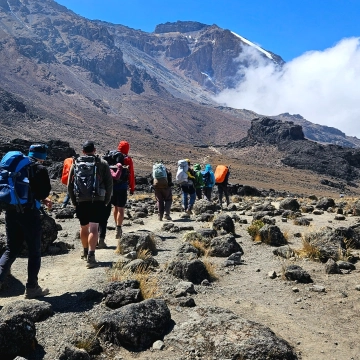
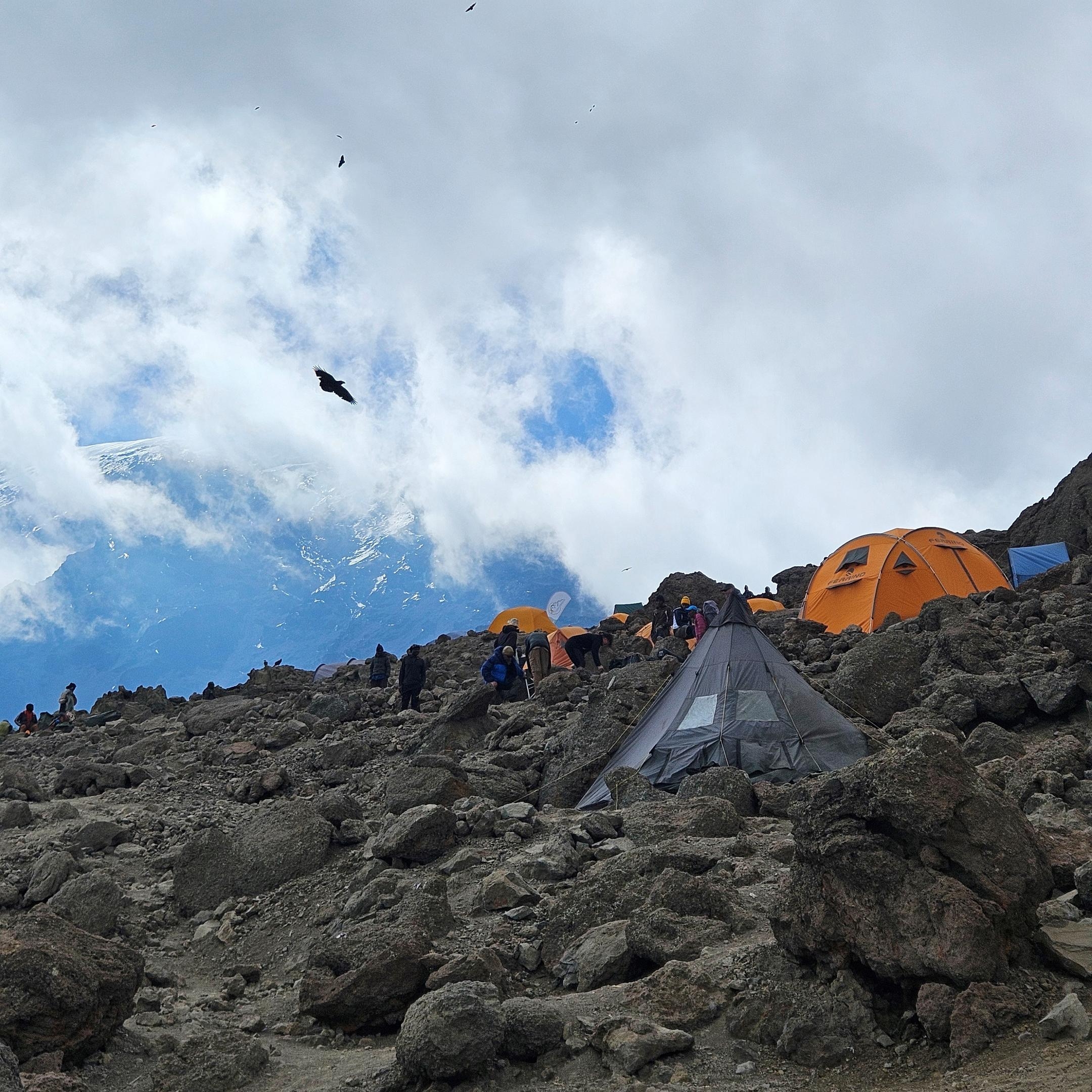
Today's trek continues through Kilimanjaro’s barren alpine desert. Vegetation becomes increasingly scarce as the landscape transforms into a rugged, rocky wilderness. After a relatively short hike, climbers arrive at Barafu Camp, the base camp for the summit attempt. Following a period of rest and an early dinner, preparations begin for the overnight ascent to Uhuru Peak.
Altitude: 4,640 m to 5,895 m and down to 3,100 m
Hiking Time: approx. 10–14 hours
Distance: approx. 17 km
Vegetation Zone: Alpine Desert and Arctic Zone
Shortly after midnight, the summit push begins. By headlamp light, climbers ascend steep scree slopes toward Stella Point on the crater rim. From there, the final stretch follows the crater edge to Uhuru Peak, the highest point in Africa at 5,895 meters. After celebrating this remarkable achievement, the descent continues back to Barafu Camp and onward to Mweka Camp for an overnight stay.
Altitude: 3,100 m to 1,640 m
Hiking Time: approx. 3–5 hours
Distance: approx. 10 km
Vegetation Zone: Rainforest
The final day follows a scenic descent through the lush rainforest on Kilimanjaro’s southern slopes. Dense vegetation and warmer temperatures mark the return to lower elevations. Upon arrival at Mweka Gate, successful climbers receive their summit certificates before being transferred back to their accommodation.
After breakfast and according to your flight schedule, an African Sunrise Expedition driver will transfer you from Chanya Lodge to Kilimanjaro International Airport. Before your departure, our team will personally say goodbye and assist with any final questions or arrangements.
With unforgettable memories of your Kilimanjaro adventure, you will begin your journey home. We wish you a safe journey and hope to welcome you back to Tanzania in the future.
For improved acclimatization, an additional day can be spent at Karanga Camp. During an acclimatization hike, climbers ascend to a higher elevation before returning to camp, following the principle of “climb high, sleep low.” This extra day allows the body more time to adjust to the altitude and can significantly increase the chances of a successful summit ascent. The following day, the route continues to Barafu Camp before the overnight climb to Uhuru Peak begins.
Kilimanjaro climbs are possible throughout the year. The different seasons mainly vary in terms of rainfall, visitor numbers, and visibility. While the dry seasons are particularly popular due to their favorable trekking conditions, the rainy seasons offer lush green landscapes and a more peaceful mountain experience. Each season has its own unique appeal.
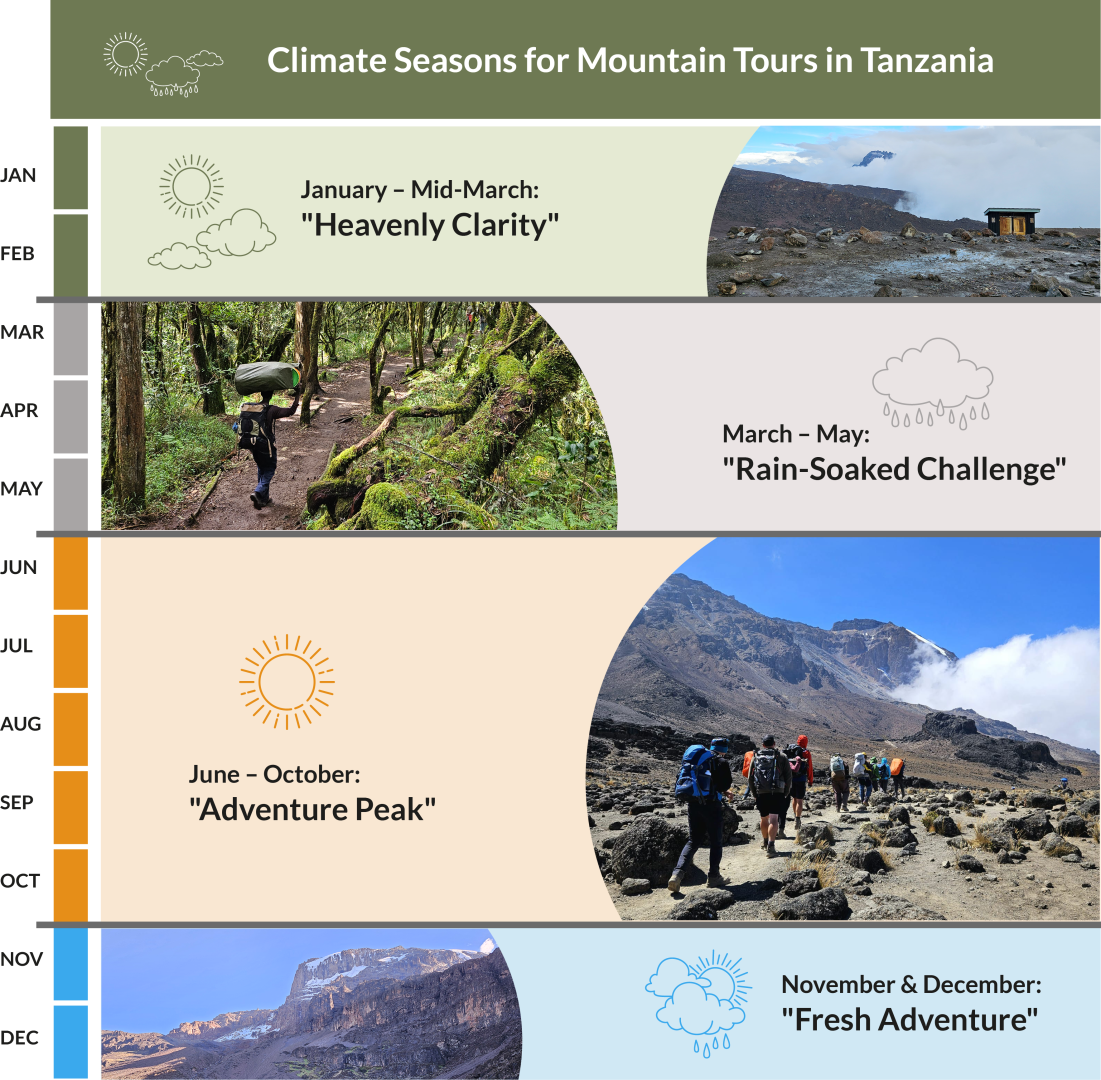
This season offers mild temperatures and calm conditions for an unforgettable Kilimanjaro ascent. Clear skies and fewer tourists make this time ideal for adventurers seeking an exclusive experience.
Possible downside: Nights at the summit can be particularly cold, and occasional precipitation is possible.
The long rainy season transforms Kilimanjaro's slopes into lush green landscapes. Although conditions are more challenging, this time attracts with deserted routes and an adventure for true outdoor enthusiasts.
Possible downside: Slippery and muddy trails require good physical fitness and appropriate equipment. Clouds may obstruct the views.
The most popular time for Kilimanjaro ascents: Dry weather and stable conditions create perfect circumstances for summit seekers. Experience the impressive natural diversity this region offers as you step closer to the roof of Africa, step by step.
Possible downside: Due to high demand, routes are more crowded, resulting in less privacy. Early planning is necessary.
The short rainy season brings refreshing showers and exceptional tranquility to the mountain. For experienced hikers seeking a unique and peaceful experience, this season is a hidden gem.